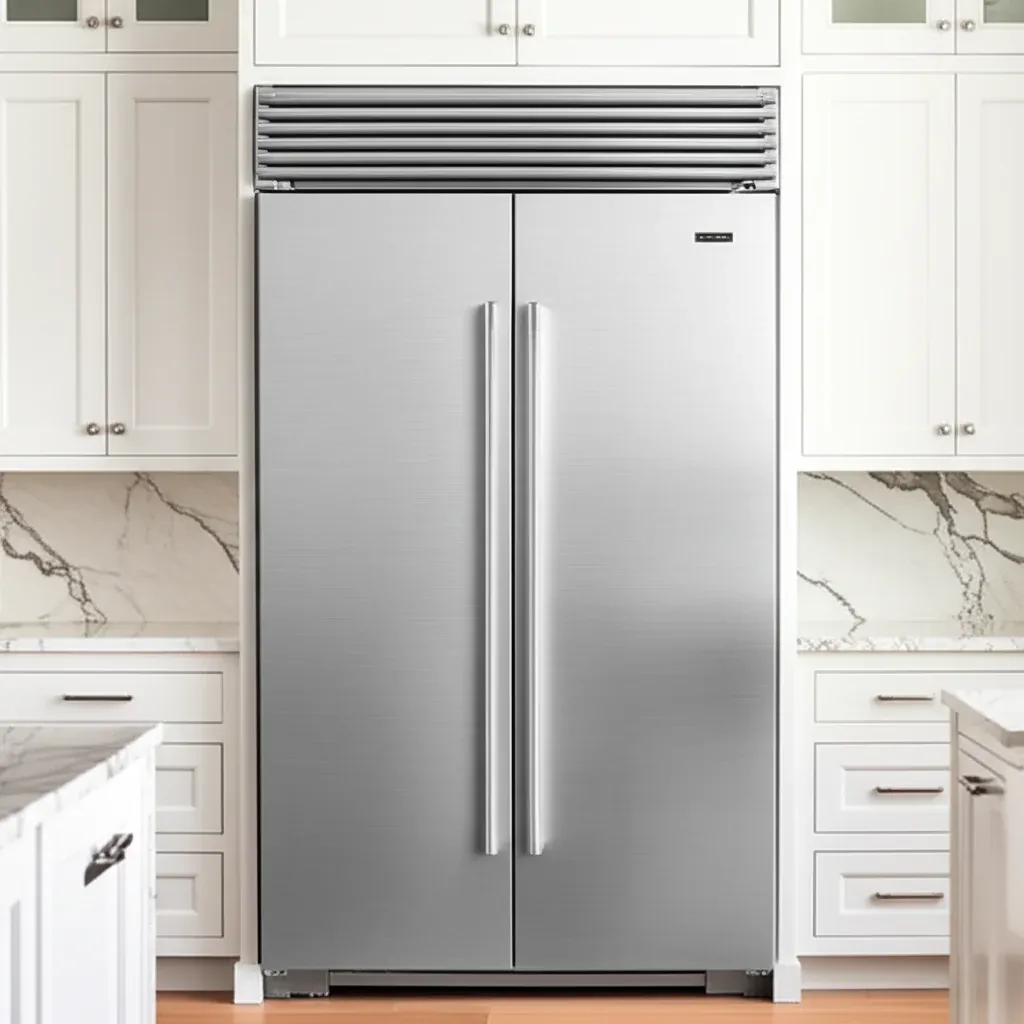
Sub-Zero Refrigerator Repair
Sub-Zero Fridge Buzzing: Which Part It Is and How to Stop It
To stop a fridge from buzzing, find the part making the noise: switch off an ice maker that has no water, melt frost away from the fan, vacuum a dusty condenser and tighten loose panels. A soft hum that pauses between cycles is normal.
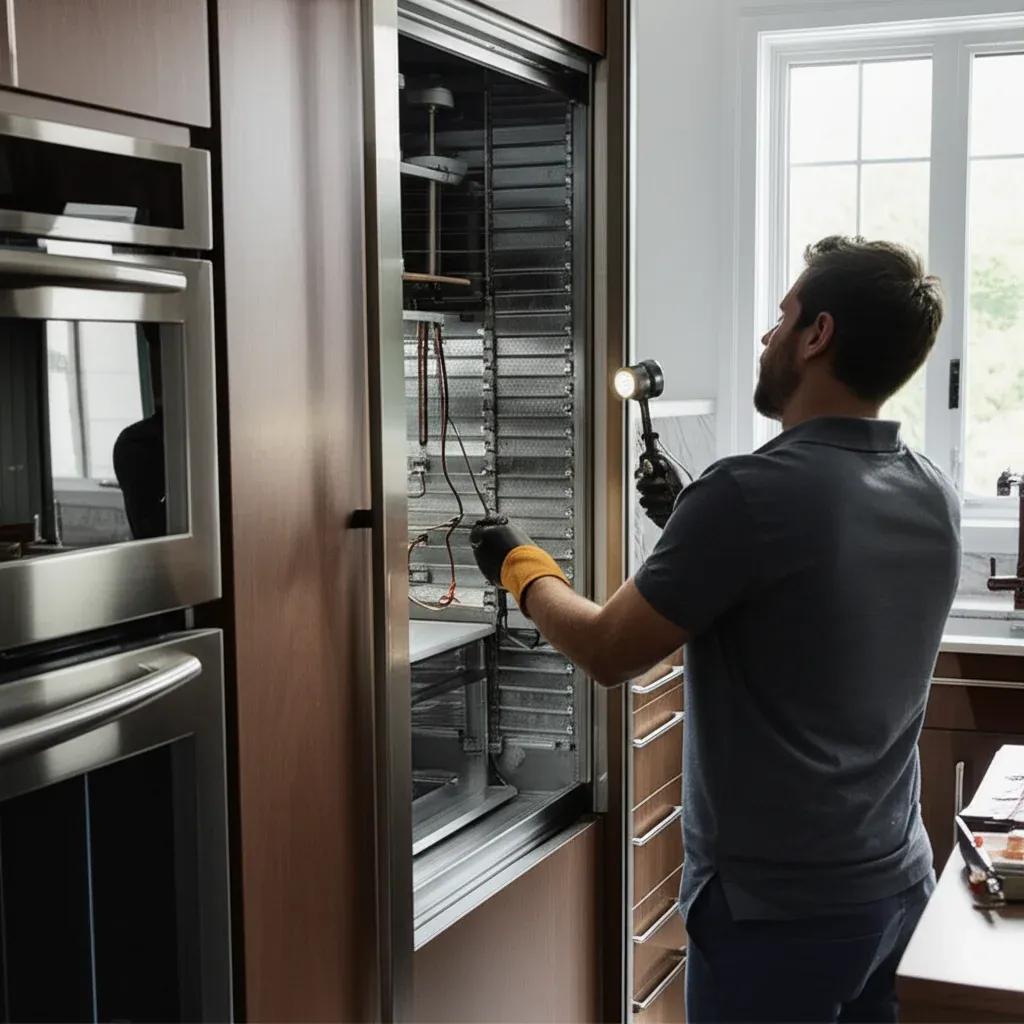
To stop a fridge from buzzing, first work out which part is making the sound, because each one has its own fix. A soft, even hum while the compressor runs is normal and needs nothing. A sharp buzz every few minutes with an empty ice bin usually means the ice maker is calling for water that has been shut off, so switch the ice maker off until the supply is back. A buzz that quits the moment you open a door points to the evaporator fan, often brushing against frost. A heavy, constant drone from a unit that hardly ever rests usually means a dusty condenser, and Sub-Zero asks owners to vacuum that every six to twelve months.
Most Sub-Zero refrigeration around Westwood is panel-ready and set flush into millwork, and that cabinetry can act like a sounding board, carrying a small vibration across a quiet open kitchen. Ten minutes of listening settles most cases.
Normal sounds and fault sounds, side by side
When the noise starts, note how long it lasts, whether it repeats on a schedule, and what happens when you open a door. Then match it here.
| Sound | Likely cause | What you can check | When to call |
|---|---|---|---|
| Low, even hum that comes and goes | Compressor running a normal cycle | Nothing; it should rest between runs | If it never stops and the fridge is warm |
| Short, loud buzz every few minutes, no ice | Ice maker water valve with no water | The supply shutoff and the ice maker switch | If the water is on and the buzz goes on |
| Buzz that stops as a door opens | Evaporator fan, often touching frost | Frost on the back wall of the freezer | If the noise returns after you defrost |
| Rough whir or tick near the grille | Condenser fan or debris on the coil | Dust and lint on the condenser | If the fan still sounds rough once clean |
| Rattle that changes when you press a panel | Loose panel, trim or kickplate | Screws, toe kick, items on top | Rarely needed |
The ice maker buzz, and what to do about it
This is the most common buzz in a house where the ice maker was switched on but never plumbed, or where the water was shut for a renovation or a trip and nobody reopened it. After each harvest, the ice maker opens a small solenoid valve to refill the mold. With no water behind it, the valve buzzes for several seconds, gives up, and tries again next cycle, which is why the noise comes and goes by itself.
The cure is to restore the water or turn the ice maker off at its switch or on the control panel. If the water is on, check that the line is not kinked and the filter is not long overdue, since a starved supply can make the valve chatter. A buzz with the water open plus small cubes or none at all is a valve or supply fault; replacing an ice maker, water valve or supply line typically runs $300–$690, with the firm figure given after diagnosis.
One noise is no fault at all. Pressing Max ice on Classic (CL), Designer (DET, DEC) and PRO units raises ice output by up to 30% for 24 hours, and during that day certain components can spin quicker and louder. If the sound began when Max ice went on, wait a day.
Fan noise that stops when you open the door
Most refrigerators pause the evaporator fan when a door opens. If the buzz cuts out as you open the door and comes back when you close it, the fan is your suspect. Frost is the usual reason: when defrosting falls behind, ice builds around the evaporator and the blade grazes it.
For heavy icing, Sub-Zero’s guidance depends on the line. The Classic (CL) and Designer (DET, DEC) guides say to turn the unit off and melt the ice with a hair dryer on low, kept moving; the PRO Series guide calls for a handheld steamer and rules out the hair dryer. Empty the compartment first and lay towels down. If frost is back within a week or two, the defrost system is failing; defrost heater, thermostat or sensor work typically falls between $280–$670. A fan motor with worn bearings buzzes or squeals even with no ice nearby, and a new evaporator or condenser fan motor usually comes to $300–$620.
The compressor, the condenser and the buzz that never rests
A healthy compressor hums, sometimes with a click as it starts and a brief shudder as it stops. Two patterns are not normal: a compressor that runs without a break and drones louder than usual, and one that buzzes, clicks off after a few seconds and keeps retrying. The first usually means a condenser clogged with dust. The second can be a starting fault or a failing compressor, and that is a service call.
Cleaning the condenser is the one owner job here that genuinely changes the sound. Sub-Zero puts the interval at six to twelve months, shorter if a dog or cat sheds nearby. On a Classic (CL) the condenser is behind the flip-up grille; on a Designer (DET, DEC) it sits behind the kickplate, which two screws hold in place. Switch the unit off at the control panel, put gloves on, and vacuum with a soft brush moving along the fins. Keep the aluminum fins straight and skip chemical cleaners, which Sub-Zero does not recommend. A unit under six months old can skip this. More on that routine is in our spring cleaning notes for built-ins.
EC50 on the display, with Service flashing, means the compressor has been running too long. If the temperatures look about right, clean the condenser, then clear the code by keeping a finger on the bell key, which is the door-ajar alarm, for a full 15 seconds. If they are high, call instead. When the fridge is warm as well as noisy, our guide to a Sub-Zero fridge and freezer not cooling walks through the checks in order. Compressor and sealed-system repairs sit at the costly end, typically $940–$2,150.
Rattles and vibration that pass for a buzz
Some buzzing is not the machinery at all but something it is shaking. Try these first:
- Press a palm flat on each door panel and the toe kick while the noise is going. If it changes, a panel, trim piece or kickplate screw has worked loose.
- Clear anything resting on top of the unit; a tray or vase there can hum along with the compressor.
- Look inside for a bottle against the back wall or a crisper sitting crooked on its rails.
- A buzz that only seems to happen at night is often ordinary cycling that daytime noise hides.
When to stop troubleshooting and call
Call a technician when the buzz comes with rising temperatures, a code on the display, a hot or burning smell, or a compressor that clicks on and off without starting. Silencing an alarm is not a repair: on a Classic (BI), holding ALARM and POWER together and letting go inside 5 seconds hides the fault light for 24 hours, but whatever tripped it is still there.
Sub-Zero Repair Westwood is an independent shop that works on Sub-Zero built-in and column refrigerators, freezers, ice makers and wine storage. Each visit is a flat $95 for the call-out and a complete diagnosis; approve the repair and that $95 is deducted from it. Book through our Sub-Zero refrigerator repair page or call (508) 401-8451; we come out from Westwood to Needham and Newton as well.
Still asked afterwards
- Is it normal for my fridge to be buzzing?
- A soft, steady hum is normal, because the compressor and fans make it while they run, and it should go quiet between cycles. A loud buzz every few minutes, a buzz while no ice is being made, or a drone that never rests is not normal and usually points to the water valve, a fan or a clogged condenser.
- What does it mean if your refrigerator is making a buzzing sound?
- It usually means one of four things is at work: the ice maker water valve, an evaporator or condenser fan, the compressor, or a panel vibrating against the cabinetry. When the buzz happens, and whether it quits as you open a door, tells you which one to look at first.
- Why does my fridge buzz every few minutes and then stop?
- That on-and-off pattern is most often the ice maker valve opening with no water behind it. Check that the shutoff on the supply line is open and the line is not kinked, or switch the ice maker off if the unit was never connected to water.
- Why is my fridge buzzing but stops when I open the door?
- The evaporator fan is the likely source, since most refrigerators stop that fan when a door opens. Look for frost on the back wall of the freezer: a blade brushing ice makes a rough buzz, and frost that keeps coming back means the defrost system needs a technician.
- How do I stop a loud refrigerator buzzing noise right away?
- Turn the ice maker off if its water is shut, lift anything resting on top of the unit, and press on the panels to find a rattle. If the noise is loud and constant and the fridge is getting warm, call for service instead of unplugging and restarting it over and over.