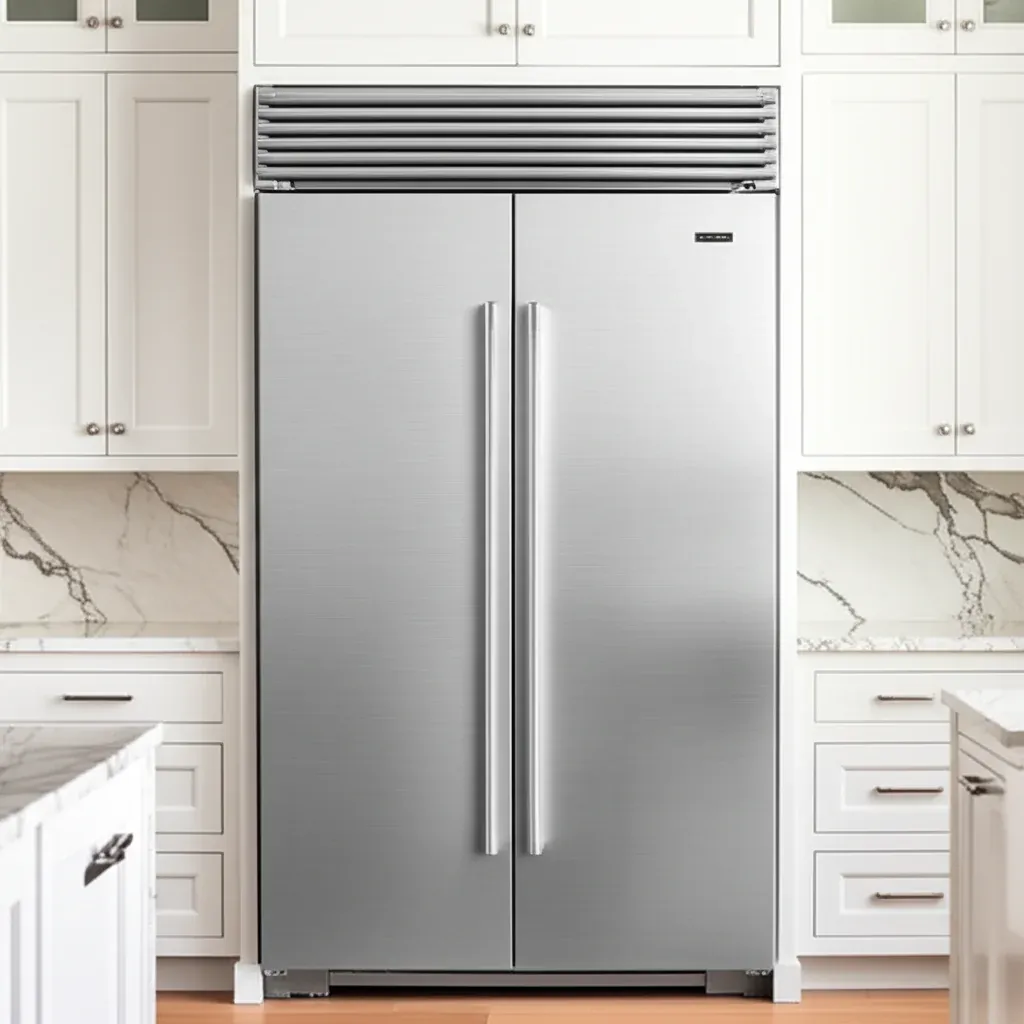
Sub-Zero Refrigerator Repair
Appliance Warranties, Read Properly: What Is Covered When a Built-In Fails
Cover on built-in refrigeration is granted part by part and year by year, and parts and labour run on separate clocks. Which of three documents you are holding decides who you telephone — and while any of it is live, the manufacturer's line comes first.
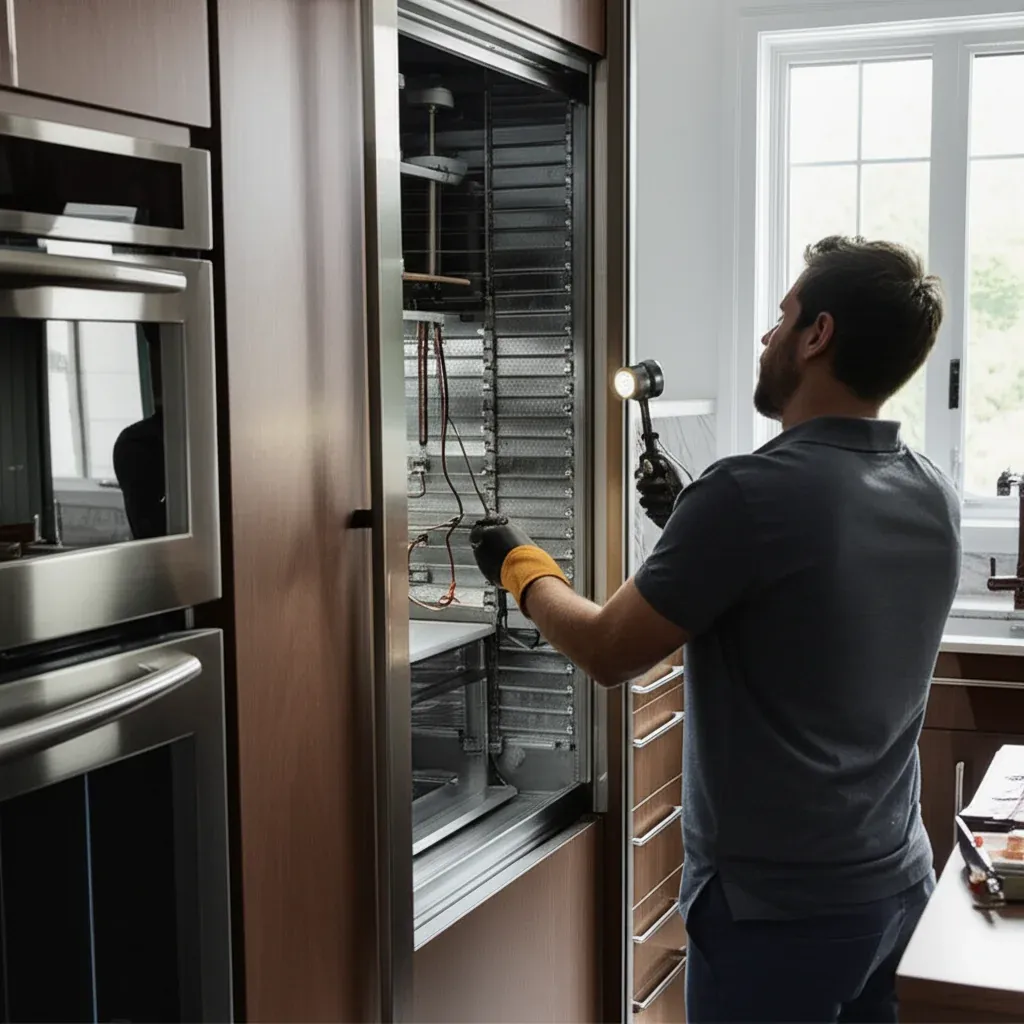
Two facts settle most warranty arguments before they start, and neither of them is in the brochure. The first is that cover on a built-in is granted part by part and year by year, so “is it still under warranty” is almost never a yes-or-no question. The second is that parts and labour run on separate clocks — and the year in which a sealed-system component is still covered while the day’s work to fit it is not is the year most owners discover this.
There is also one procedural rule worth stating before anything else. If any part of the manufacturer’s cover is still live, the manufacturer’s own service line is the first call you make. Warranty work belongs with a factory-authorised provider, we are not one, and no independent shop is — having unapproved hands inside the appliance first is the tidiest way to lose a claim you would otherwise have won.
Three documents, and only one of them is a warranty
Households tend to file all of these under the same word, and they are issued by three different parties with three different claim routes.
The manufacturer’s warranty arrived with the appliance. It is written by the maker, it attaches to the serial number, and it is the only one of the three that is a warranty in the strict sense.
The extended service contract or protection plan was sold at the till and is an insurance product, usually administered by a third party the retailer has an arrangement with. The shop that sold it to you frequently has no involvement in a claim beyond pointing at a phone number.
The installer’s or repairer’s own cover applies to their workmanship and to the parts they supplied. It is the shortest of the three and the most often forgotten, and it is the right one to reach for when a fault appears within weeks of somebody working on the appliance.
Establishing which one is in the drawer takes a minute and determines everything that follows.
The cover is tiered, and the tiers are the whole story
Built-in refrigeration is typically written in layers. There is an initial period in which parts and labour are both covered. Behind it sits a longer period covering the sealed system — compressor, condenser, evaporator, the connecting tubing. Behind that there is often a limited tail on certain components only.
The lengths of those layers differ by product line, by series and by when the appliance was bought, which is precisely why your own document is worth ten minutes and a search result is worth nothing. Anybody who quotes you a number without first asking which unit you own is guessing.
The trap lives in the middle layer. Sealed-system cover is frequently parts-only, so the component itself arrives at no cost while the labour to fit it, and the refrigerant handling that goes with it, do not. That is not a loophole — it is written plainly in the document — but it is the reason a covered failure can still produce a real bill.
So the question to put to the service line is three-part rather than one: is this specific part covered, is labour covered with it, and for how much longer.
When the clock started
Three dates get confused, and the difference is not academic on a built-in.
The manufacture date is what the serial plate records. It is not proof of purchase and it is not usually the start of anything.
The purchase or delivery date is what most manufacturer cover runs from.
The installation date can be months later, because appliances bought for a renovation sit in a garage waiting for the cabinetry. Where cover runs from purchase, that waiting time comes out of your first and most valuable layer — and nobody points this out at the time.
The practical answer is small and permanent: photograph the invoice and the serial plate together, and keep the pair somewhere you will find them in six years.
What actually gets a claim declined
“Voiding the warranty” is used far more loosely than manufacturers use it. What normally happens is that a particular claim is declined, not that the document is torn up.
The declines that recur on this equipment are worth knowing in advance:
- an unapproved repair, or non-approved parts fitted to a sealed system
- damage attributed to installation — insufficient ventilation behind an integrated cabinet, a unit fitted tighter than the instructions allow, or a supply line run badly
- anything that arrived from outside the appliance: a surge, a flood, a supply-water problem
- consumable and cosmetic items, which are almost always excluded outright
- commercial use of a domestic appliance
The installation line deserves its own sentence, because on a panelled built-in it is the commonest declined claim of all. When a maker attributes a failure to how the appliance was fitted, the argument you are actually having is with the installer, and the paperwork you need is the one from the kitchen fit, not the one from the appliance.
Extended plans: three clauses that decide their value
Read the exclusions, obviously. Then read these.
Who administers it, and what the claim procedure is. Nearly all of these require authorisation before work begins, and paying for a repair yourself and asking to be reimbursed afterwards is the single most common way a valid claim fails.
What happens if the plan chooses not to repair. A plan written around freestanding appliances settles by supplying a replacement appliance. On an integrated column there is nothing that simply slots into the opening, and the panels, the fit and the joinery are not the plan’s problem.
Whether you may choose your own servicer, and whether the plan pays for diagnosis. Plans that let you nominate a repairer are considerably more useful than plans that send whoever is on their list.
Out of cover, and what changes
Once every layer has expired the decision-making comes back to you, and it is not the disaster people expect on this class of appliance. You choose who works on it. You see the fault described and priced before anything is committed. Factory-approved parts are still the right call on a sealed system, and they remain available for these platforms far longer than for mass-market refrigeration.
The economics also stay in favour of repair for a long time, because replacing a panelled built-in is a cabinetry project rather than a purchase — the opening, the panels and the fitting all come with it.
If you are at that point, the practical next step is small: find the invoice, note the purchase date, photograph the serial plate, and then get the fault described properly by somebody who will put parts and labour into one figure before touching anything. That is what a visit here is for. It is $95, credited against the repair once you approve it, and the line at the top of the page is answered around the clock.
Still asked afterwards
- The paperwork is long gone. Is that the end of the cover?
- Usually not. Manufacturers keep a record against the serial number if the appliance was ever registered, retailers can reissue an invoice years later, and a card statement establishes the date even when nothing else survives. Start with the retailer, because the purchase date is the fact everything else hangs off. And register the next appliance the week it arrives — it takes a few minutes and it removes this whole problem.
- Does letting an independent shop look at it void the cover?
- It depends entirely on what looking means, and the sensible rule while any cover is live is not to find out. A conversation costs nothing and reading a temperature costs nothing, but the moment somebody unapproved has the appliance apart you have handed the claims department an argument it did not have. If you ring us and the appliance is still in cover, we will tell you to use the manufacturer's route rather than take the booking.
- My plan says it will replace the appliance instead of repairing it. Is that good news?
- On a panelled built-in, often not. Ask three questions before you accept a settlement: what goes into the opening, who pays to remove the old unit and fit the new one, and what happens to the custom panels and the surrounding cabinetry. A plan written for a freestanding appliance settles by handing over an appliance, and the joinery around it is nobody's responsibility but yours.