Sub-Zero Ice Maker Repair
Why Sub-Zero Cubes Turn Cloudy and Small Over a Westwood Season
Cloudy, shrinking Sub-Zero cubes are usually a water problem rather than a machine problem — restricted supply, a saturated cartridge or scale building in the mould. Work the supply from the stop valve inward before blaming the ice maker.
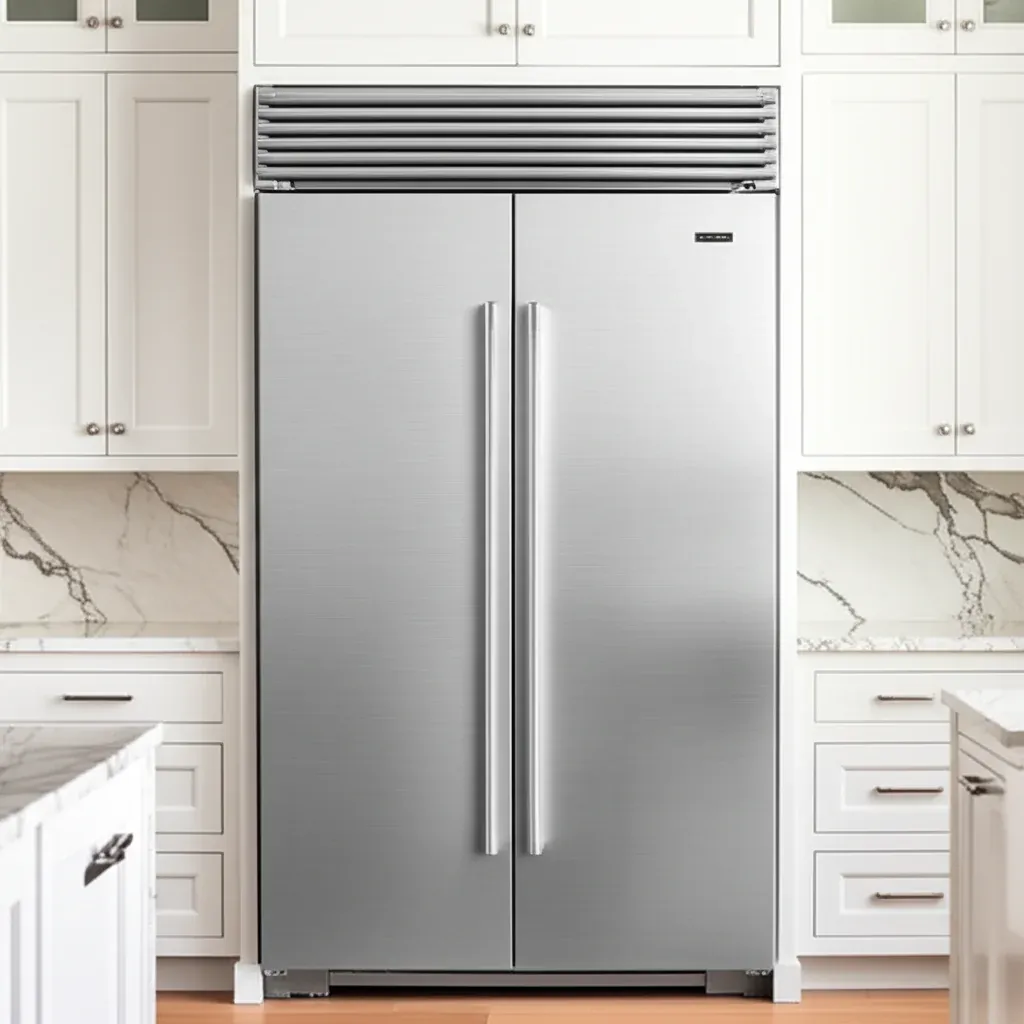
The complaint arrives in one of two shapes. Either the cubes look wrong — milky in the middle, smaller than they were — or the bin never fills the way it used to. Both point the same direction, and it is not the direction most people look first. Before anything inside the cabinet gets blamed, it is worth examining the water the machine is being handed.
Shape, clarity, size: three separate signals
Four different cube faults get described with the same three words. Hollow or dished cubes mean the mould received less water than the cycle allowed for. Milky cubes are dissolved air and minerals forced out of solution during the freeze. A bonded slab formed after the cubes were released. Small, solid, clear cubes are a fourth signal again — usually a short fill rather than a bad one.
Separating them costs nothing. Take a handful out, spread them on a board, and describe each one on its own terms. Hollow and small are not the same complaint, and they do not lead to the same check.
Westwood kitchens make this slightly harder than it needs to be. Refrigeration here is nearly always integrated behind cabinet panels, in an open-plan room with island seating, which means the machine is invisible until something is wrong with what comes out of it. There is no rattle to notice and no cabinet to peer behind. The bin is the only instrument most households have, so it is worth reading properly.
The water side, checked before the machine
The supply is where a seasonal decline usually starts. A stop valve that was closed for a plumbing job and reopened only part way, a saddle fitting that has slowly tightened on itself, or a feed line pinched behind the cabinet will all reduce how much water arrives during the few seconds the valve is open.
That short opening is the key to the whole section. A restriction that is invisible at a tap running for a minute is decisive for a valve that opens briefly and then closes regardless of how much got through. The cycle does not wait for a full mould; it fills for its interval and then freezes what it has. Under-fill, then, produces the dished cube directly, without anything having failed.
In the Needham Center houses where a panelled column stands against an interior wall, everything happens from the front — including the fact that nobody has looked at the line behind it since the cabinetry went in.
When was it last changed?
Ask this before anything else, because a saturated cartridge restricts flow well before it affects flavour. Taste is a late indicator and a poor one. Households routinely run a cartridge months past its interval on the grounds that the water still tastes fine, which is precisely the trap.
Aftermarket cartridges introduce a second and separate question. Filtration quality is not the issue; throughput is. A replacement that passes water more slowly than the original starves a timed fill even while it is brand new and clean.
If your unit takes a bypass plug, fitting one is a legitimate test. Cubes that return to full size with the cartridge removed tell you that cartridge was restricting flow. Cubes that stay small tell you the restriction is elsewhere. Neither result says anything about the rest of the supply. For the interval itself, read the use and care guide for your series rather than adopting a number that came from a different one.
Scale in the mould and on the sensor
Everything dissolved in the water stays behind when the ice leaves. Over enough cycles that residue builds a film on the mould and on the surfaces the machine uses to sense what it is doing, and the effect is cumulative rather than sudden — which is exactly why it presents as a season-long decline instead of a failure.
A coated mould conducts heat less well in both directions. Freezing takes longer, cubes come out cloudier, and release becomes reluctant. Nothing about that is dramatic on any single day.
Whether your supply is mineral-heavy enough for this to be the main story is a question to settle for your own address rather than assume. Needham Heights sits on higher ground and Needham runs lower, but town water is a distribution question and the honest answer is to check what is supplied to your street. If the house runs softened water, that is another separate question worth asking before drawing conclusions, because softening changes what is in the water rather than removing everything from it.
The appliance is not cold enough to make good ice
Cube quality depends on the temperature where the mould sits, and that is not the figure on the display. The compartment reports an average; the maker occupies one corner and depends on air actually reaching it.
Two everyday things interfere. The first is loading — a compartment filled to the walls, or a return vent blocked by a flat box, changes local airflow without changing the displayed number at all. The second is door traffic. Every opening costs recovery, and in the open-plan Newton and Needham kitchens where the column sits in the main circulation route, the door gets opened far more often than anyone would estimate.
Production figures are specified per twenty-four hours and assume a door that is mostly closed. Judge the machine against that assumption before judging it against last winter.
Harvest: making ice and letting go of it
Harvest is the second half of the cycle: the mould is warmed briefly so the ice releases, and an ejector clears it into the bin below. A machine can make ice perfectly and still fail here, which is why release is worth treating as its own subject.
Cubes fused into a slab in the bin normally point at timing or at a bin that nobody empties, rather than at the freezing side. Cubes that stay in the mould are a different matter entirely and belong to the release mechanism.
Two behaviours are observable without tools. The sensing arm swings down and back, halting production when it meets ice; anything propping it up stops the machine silently. The ejector should sweep the mould clean each time. Watching is fine. Levering, chipping and dismantling are not: ice maker repair on a Sub-Zero starts at the module, and the module is where a household stops.
What is worth calling about
Three findings end the self-diagnosis stage: water pooling under or in front of the cabinet, a visibly wet supply line, and a compartment that will not hold its set temperature. The third one outranks the ice entirely.
What a visit adds is measurement. Fill volume per cycle, inlet pressure while the valve is genuinely open, and cycle timing are the three numbers that separate a supply fault from a machine fault, and none of them can be estimated by looking. The visit itself is $95. Where the outcome is the ice maker, the water valve or the supply line, the work typically falls between $300 and $690. Needham, Needham Heights and Needham Center are all served from here. Ring the number set at the top of this page, or use the booking link beside it.
Still asked afterwards
- Would a whole-house softener solve this?
- It might change the water, but treat it as a plumbing decision rather than an ice-maker repair. Softening alters what is dissolved in the supply rather than removing it, and it will not undo residue already built up inside the machine. If cube quality is your only reason for considering one, get the current fault diagnosed first — a restricted cartridge or a partly closed valve costs far less to put right.
- Do hollow cubes always mean a supply problem?
- Usually, but not always. A short fill is the common cause, and short fills mostly come from restriction upstream. The same shape can appear when the cycle is being cut short at the machine end, or when the mould is releasing before the freeze has completed. Ruling out the supply first is efficient, not conclusive — if the water side checks out clean, the fault is inside.
- Does it matter which replacement cartridge I buy?
- It can. The concern is not usually filtration quality but how quickly water passes through. The fill runs for a set interval and then stops, so a cartridge with lower throughput delivers less water per cycle even when it is brand new. If cube size dropped shortly after a cartridge change, the cartridge is the first thing to swap back out and test.